
The Most Important Voice In The Cancer Journey That Patients Never Hear
When patients think back on a cancer diagnosis, they often remember the moment they heard the words.
They remember the surgeon who explained the plan.
The oncologist who outlined the next steps.
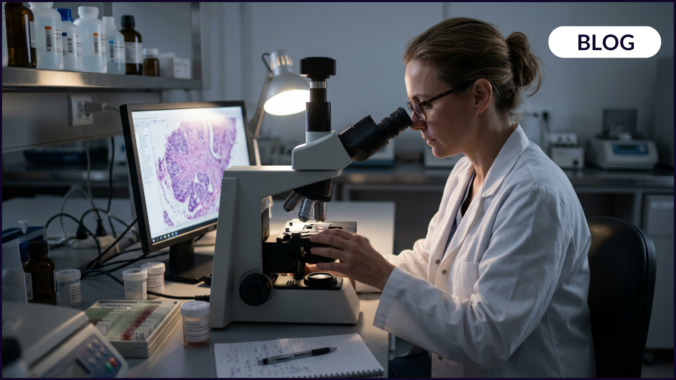
What they don’t see is the work that defined the diagnosis before those conversations ever began.
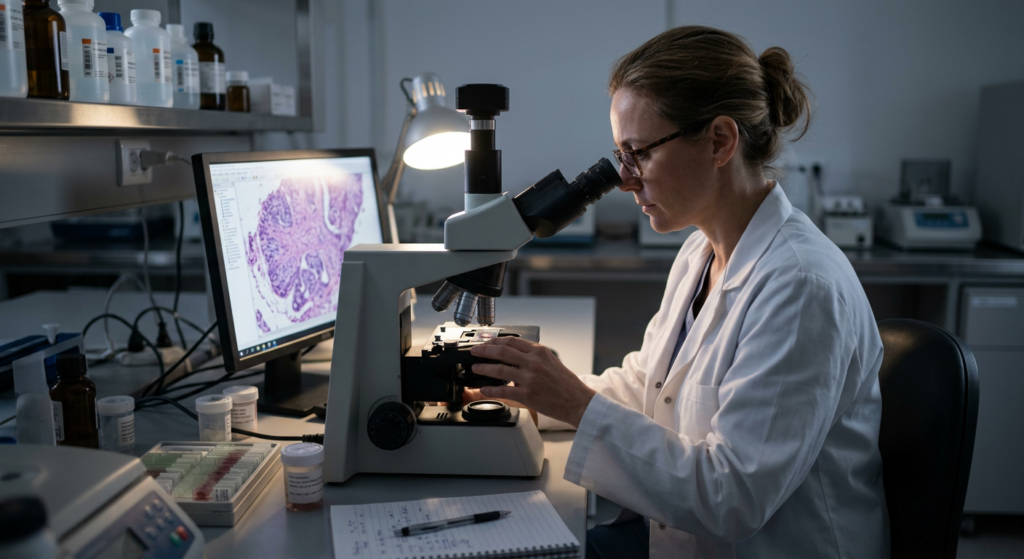
It happens under a microscope.
It begins in pathology.
Long before an incision is made or systemic therapy is selected, the nature of the disease is established. In oncology, that process increasingly integrates traditional morphologic evaluation with molecular and genomic insights that inform treatment planning.
As cancer care becomes more individualized, the integrity of the diagnostic process matters more than ever.
The Diagnostic Bar Is Higher Than Ever
Cancer diagnosis is no longer a binary answer.
A pathology report today may influence:
- Eligibility for biomarker-driven therapies
- Surgical margin assessment and staging
- Risk stratification and adjuvant planning
For pathologists, this means careful attention to pre-analytic variables such as cold ischemia time and fixation practices. Professional guidance from CAP and ASCO emphasizes standardization of pre-analytic factors to support reliable biomarker assessment.
As therapies become more targeted, variability that once seemed minor may carry greater significance.
The pathology report is not administrative documentation. It is a clinical instrument that informs next steps across disciplines.
The Intraoperative Moment
Few settings demonstrate collaboration between surgery and pathology more clearly than intraoperative consultation.
During frozen section evaluation, decisions may hinge on:
- Margin involvement
- Need for additional tissue removal
- Lymph node identification
Frozen section remains an important intraoperative tool in surgical pathology. Yet contemporary quality analyses note recognized limitations, including sampling constraints and freezing artifact, which may affect interpretation in selected scenarios.
Margin and nodal findings may influence staging and subsequent management decisions. These are shared responsibilities. Accurate communication, specimen orientation and clinical context all contribute to meaningful interpretation.
The Physical Specimen Still Matters
As oncology evolves to incorporate digital pathology and molecular profiling, every case still begins with a physical specimen.
Professional guidance underscores that fixation quality, processing consistency and section preparation can influence downstream biomarker evaluation.
For pathologists, this reinforces laboratory rigor. For surgeons, it highlights the importance of thoughtful specimen handling and clear communication at the point of collection.
Precision medicine depends not only on advanced therapies, but also on reliable diagnostic foundations.
Pathology at the Multidisciplinary Table
Cancer care is inherently collaborative. In tumor boards and multidisciplinary discussions, pathology findings inform:
- Disease classification
- Stage determination
- Margin status
- Biomarker interpretation
Multidisciplinary cancer conferences bring together pathology, imaging and clinical findings to guide treatment planning and individualized care.
Surgeons, pathologists and oncologists contribute to the consistency and clarity that support these discussions — from specimen acquisition to final report.
What Precision Really Requires
Oncology continues to advance through targeted therapies, molecular characterization and emerging technologies.
Those advances rely on diagnostic processes that are thoughtful, standardized and aligned across disciplines.
Precision in cancer care is not solely about new treatments.
It is also about maintaining rigor in the systems that define the disease itself.
That work often happens behind the scenes.
But its impact is shared across the care team — and ultimately, by every patient.